Transaction messages
Version: Proces specification SALES005 v1.0
Version management
| Date | Version | By | Comments on the change |
|---|---|---|---|
| 1 june 2018 | 1.0 | Luuk d’Hooghe Herman Drenth Loïs Timmer | • Documentation updated to SALES005 • Documentation in new style • Pictures updated • Tables updated • Merged Quotation and Request for Quotation with other transaction messages • Added picture coherence with SALES Standaard • Deleted old information on SSCC, see gs1.nl • Paragraph 5.2 [RFC 2017/003] • Paragraph 8.2 explanation use 380 credit invoice • [RFC 2017/021] • Paragraph 8.4.3 en 8.4.4 divided, explanation payment discount and credit restriction + calculation rules • Paragraph 8.4.5 use of reverse charge rule in the SALES Standaard [RFC 2017/005] • Paragraph 8.4.9 added supplier /invoicer • [RFC 2017/026] • Paragraph 8.4.5 added VAT information. [RFC2017/005] |
| 1 september 2018 | 1.0 | Luuk d’Hooghe Jos Hebing | • Proces and improve coherence transaction messages • Rules of play Order Response • Input Reviewpoints • VAT reverse charge |
1 Introduction
This manual contains the general playing rules for companies in the construction and installation sectors who wish to exchange standardised and electronic messages. It is a sector-specific basic document per processing area (data messages, transaction messages and maintenance messages) with general information regarding the electronic communication and usage rules and requirements. In the construction and installation sectors, XML-messages are used.
1.1 The relation between Transaction messages within the SALES Standard
The transaction messages are shown schematically in the chart below in the middle column (green). The blue column visualises the data messages and the orange column the maintenance messages.
It is possible to send an Maintenance Instruction message after a the (service) Quotation message. The Invoice can be forwarded eventually, after having sent the Status message. The relation between the Data messages and the Transaction messages is present as well. If the correct information (data) is present, an order will be placed with the Order message.
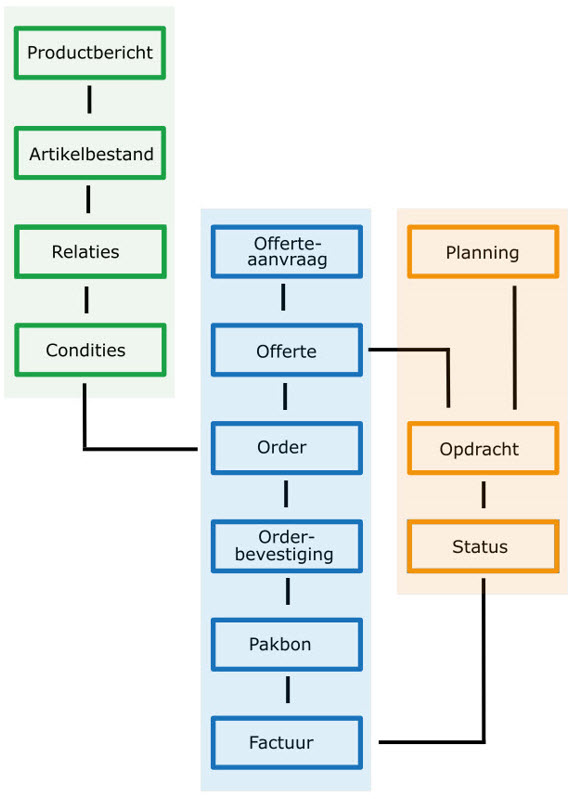
Figure 1 - Current messages in the SALES Standaard
1.2 The aim of this document?
In this document, you will find the overarching agreements that have been made within the sector regarding the usage of XML messages. This process model is meant for transaction messages (request for quotation, quotation, order, order response, despatch advice and invoice), and gives an overview of the playing rules relevant within the SALES Standard.
1.3 Which documents are part of the user’s documentation?
The user’s documentation for transaction messages contains two documents: a process description (this document) of the transaction messages, and, for every message, a technical document with:
- Functional description with an overview of a message’s data groupings and attributes;
- Technical description which is a translation of the abovementioned function description to the SALES XML format;
- Examples (XML-charts, etc.).
The documentation has been compiled with the utmost care, please contact Ketenstandaard for clarifications in case of any unforeseen inaccuracies or uncertainties. Please do not attempt to provide a personal interpretation, so as to prevent any dialects within the standard.
The documentation describes the scope of application for the SALES Standard. The structure, contents and usage rules will be clarified. Final SALES XML messages are to conform prescribed requirements. A license is required for the factual exchange of SALES messages. For more information and the terms of use, please visit www.ketenstandaard.nl.
1.4 Authors
Ketenstandaard Bouw en Techniek manages the SALES Standard and facilitates SALES Commissions for the Bouw and Techniek (Construction and Installation). Businesses within the sector are represented in such commissions, which ensures a connection with the sector’s need for information.
For any further questions or remarks regarding this document, please contact info@ketenstandaard.nl. This document is maintained jointly by Ketenstandaard Bouw en Techniek.
2 Process Transaction messages
Within this process, data concerning quotations, orders, despatch advices and invoices can be exchanged. The messages that are forwarded in this manner are the Quotation request, the Quotation message, the Order message, the Order response, the Despatch advice (packing note) and the Invoice. These are called the transaction messages. Below, the proces and parties involved will be discussed.
2.1 Transaction messages
Within the process of exchanging transaction messages, the following messages are supported:
- Quotation request: as such, the quotation request can be offered to the supplier in a structured manner. The quotation request can be used for products with no set price;
- Quotation message: the quotation is used for products with no set price. The quation can be confirmed, which secures the assignment;
- Order message: the order message enables the customer to place an order with the supplier. The order message contains all relevant information needed to place an order for goods or services;
- Order response: the order response enables the supplier to indicate what shall eventually be delivered. It is presumed that the supplier shall deliver as per the order, and this can be indicated in the order response. Order response can be send multiple times. The receiver should be capable of processing several order response;
- Despatch advice (packing note): the despatch advice is used to forward data concerning the delivered goods between the supplying and receiving party;
- Invoice: based upon the delivered goods and the commercial agreements, the customer and supplier shall agree upon a price to be paid, which shall be forwarded by means of the invoice message.
We distinguish between the following roles:
Tabel 1 - Parties roles with their activities
| Chain party | Activities | Role |
|---|---|---|
| Contractor, installer, wholesale company | Forwarding the quotation request, ordering and completing the payment | Customer |
| Producer, wholesale company | Quotation, confirm order, after which delivery shall take place. Process shall be completed by means of the invoice. | Supplier |
Not just the chain party is of relevance here. The underlying systems are of increasing importance for the correct data-transmission via the SALES Standard. The ERP (Enterprise Resource Planning) system, for example, enables organisations to structure and automatize the transaction-message correspondence.
2.2 Coherence transaction messages
In this chapter, the coherence between the various message is discussed, as well as the sector-wide agreements that have been made.
2.2.1 Usage of the GS1 codes
In het elektronisch berichtenverkeer wordt gebruik gemaakt van GS1 codes. Met het GS1 codesysteem kunt u artikelen, adressen en verzendeenheden voorzien van wereldwijd unieke identificatie.
- Every product first introduced onto the market is given its own unique GS1 trade item code. The GS1 trade item code is internationally known as the Global Trade Item Number (GTIN);
- Logistic packing units are coded with the so-called GS1 forwarding code, or the Serial Shipping Container Code (SSCC). With this code, you are able to, globally, uniquely identify logistic packing units, such as packages, pallets and trolleys;
- Addresses and locations (e.g. a physical location, such as a distribution centre or an administrative location) can be provided with a GS1 address code. This code is internationally known as the Global Location Number (GLN).
2.3 Rules on coherence between the messages
When using transaction messages, the following rules are in play:
- There is a relation between the order message, the order response message, the forwarding message and the invoice message;
- One order is confirmed with one order response;
- One order response can refer to max. one order;
- This order can be modified per new order response;
- The most recent order response is leading for the delivery, meaning that previous order responses are annulled;
- One order or one order response can lead to one or more forwarding messages;
- One forwarding message refers to max. one order;
- In one truck, more than one shipping might be present, because:
- The trade items derive from several orders;
- The trade items come from multiple warehouses;
- The trade items have different destinations (with crossdocking).
- Every forwarding message shall be followed by one invoice (joint invoices are thus excluded);
- One invoice refers to max. one forwarding message. If this is not possible, there not being a forwarding message, reference to the order will be mead in the headings;
- Addresses used in the order are to be used in the order response, the forwarding message and the invoice. Keep in mind:
- With a normal delivery, a delivery address is obligatory, and with backhauling a pick-up address is obligatory;
- In an invoice that is equal to earlier transaction message, the invoice address should be added;
- A correction invoice has the same addresses as the original invoice.
- One day is always defined as a calendar day.
To indicate that an invoice might refer to a particular order, references are necessary. In the table below, the references between order, forwarding message and invoice are shown:
Table 2 - Reference between Order, Order response, Despatch Advice and Invoice
| Message | Identification | Possible references |
|---|---|---|
| Order | Ordernumber | |
| Order response | Order response number | Order number |
| Verzendbericht | Despatch message number | Order number, order response number |
| Invoice | Invoice number | Order number (or assignment number) Despatch number Invoice number (to-be-corrected invoice) |
2.4 Rules regarding references on the header
A message is comprised out of a general part, usually indicated in the ‘headings’, in which the data relevant for the entire message is specified. This might include the GLN of the supplier and the customer, the order number and the delivery times.
General assumptions:
- There is a one-to-one relation between the paper packing slip and the despatch advice message. The despatch number is equal to the number on the packing slip.
- There is a one-to-one relation between the despatch advice message and the invoice. in the invoice, the (unique) despatch advice message number is mentioned;
- For the correct use of the electronic communication, it is important that the correct address information is used. For the messages order, order response, despatch advice and invoice, the following addresses are relevant:
- Customer: mandatory;
- Supplier: mandatory;
- Delivery address: mandatory;
- Pick-up address: mandatory in case of backhauling;
- Final destination: mandatory with crossdocking;
- Invoice address: mandatory in the invoice and the order message, if the receiver of the invoice is different from the delivery address.
2.5 Rules regarding references at line level
Next to the headings, there is a so-called ‘line level’ at which the data of a particular trade item and/or packing unit can be indicated. A line contains the data of one trade item and/or packing unit, such as the GTIN, the SSCC, delivered amount and the due date. A message usually contains several lines.
General assumptions:
- At line level, the line number serves as reference number between the various messages;
- If the supplier delivers trade items of one order line on multiple load carriers, and if the supplier indicates the relevant information per Serial Shipping Container Code (SSCC), this shall lead to multiple lines in the despatch advice message. Similarly, if the supplier of an trade item forwards different batch numbers or due dates, one order line might lead to multiple lines within the despatch advice message;
- Ketenstandaard advises to ensure that the order in which the lines are mentioned in the paper packing slip (shipping documents) and in the despatch advice message are the same.
The figure found below indicates how, for one trade item, the relations between the order, despatch advice and invoice rules might look like:
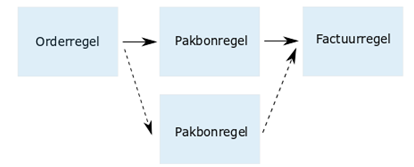
Figure 2 - Relation between Order-, Despatch Advice and Invoicelines
Within the invoice message, the despatch lines from the despatch advice message are, preferably, combined, so long as the price and/or promotion variance code are the same.
Table 3 - Example combined despatchlines in the invoicemessage
| Message | Combining of despatch rules |
|---|---|
| Order | 10 pieces GTIN A |
| Order response | 10 pieces GTIN A |
| Despatch Advice | 5 pieces GTIN A with batch 20090131 5 stuks GTIN A with batch 20090331 |
| Invoice | 10 pieces GTIN A |